


Lessons from the hive—Bumble’s rebranding woes signal a need for deeper market insights.
In a bustling marketplace filled with competition and noise, rebranding can be a powerful tool for businesses to adapt to market shifts. However, not all rebranding efforts end successfully; they come with risks such as alienating existing customers, diluting the brand message and provoking unpredictable public reactions.
A prime example is Bumble’s 2024 rebrand. Known as the “feminist Tinder”—as it allowed women to make the first move—the once-celebrated dating app introduced new features and marketing strategies to keep pace with the rapidly evolving online dating landscape. However, the rebranding, communicated through a seemingly anti-celibacy campaign, quickly backfired, thrusting the company into a damage control mode to save its reputation.
In this article, let’s dive deeper into what went wrong with Bumble’s rebrand in 2024 and extract the valuable lessons from this debacle.
What’s new at Bumble?
In early 2024, with Lidiane Jones stepping in as CEO, Bumble introduced several updates to refresh its brand and widen its appeal. One key addition is the “Opening Moves” feature, which allows women to set up to three pre-composed icebreakers on their profiles. Once a match happens, men can respond to these and take the lead in starting conversations. Non-binary users and those seeking same-gender dates can also set and respond to icebreakers.
With this new setting, Bumble wants to ease the pressure on women to start a conversation upon matching. However, this move marks a significant pivot from Bumble’s original model, which empowered women to initiate conversations.
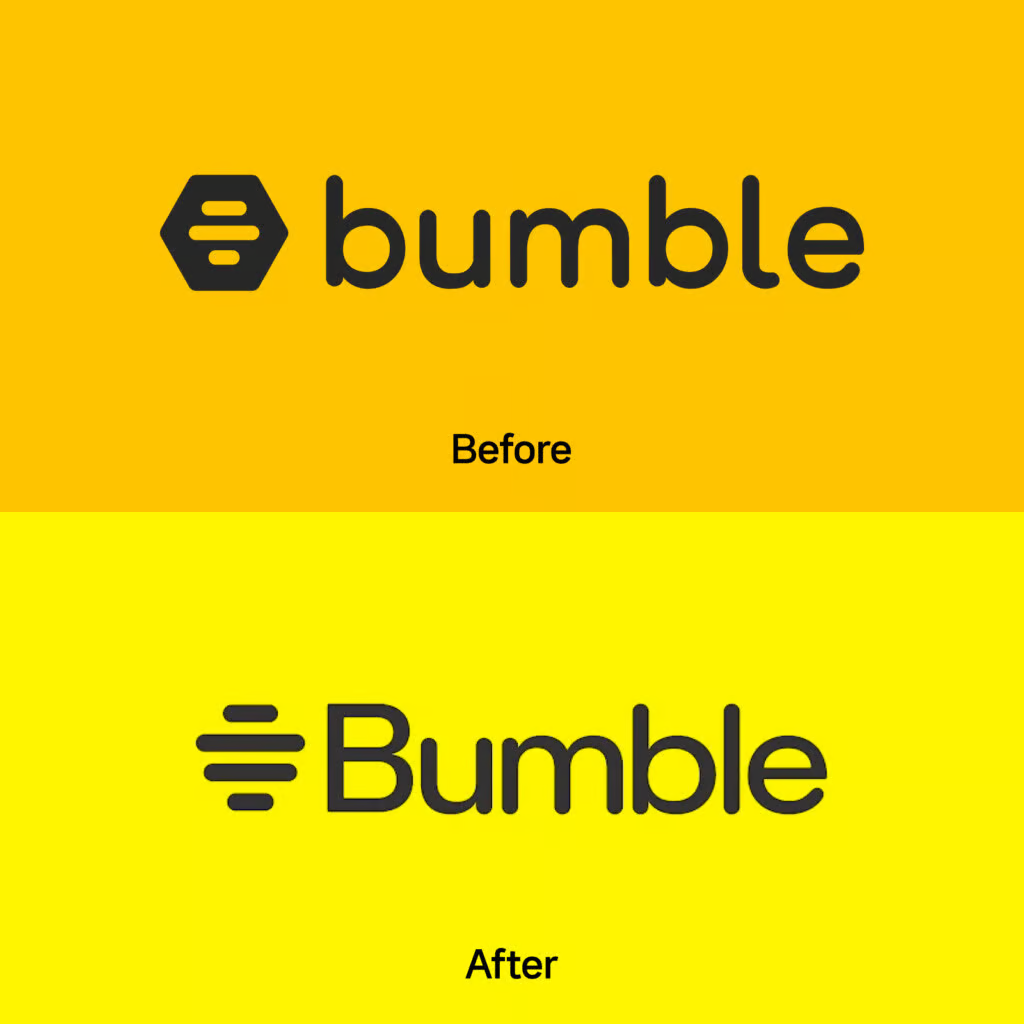
The old and new logos of Bumble
Image from The Case for Brand
Bumble also rolled out a new logo with bolder fonts and a modern color palette to signal a sleek and contemporary vibe. This redesign is particularly aimed at appealing to Gen Z users, who are becoming weary of traditional dating platforms. With the new tagline, “We’ve changed so you don’t have to”, Bumble strove to simplify the dating experience and make it more user-friendly.
These updates came during a tough time for the online dating industry, as Bumble and its main competitor, Match Group, saw their market values drop by over US$40 billion since 2021. With these changes, Bumble aims to adapt to the market and compete against the rise of social media platforms like Instagram and TikTok.
Bumble’s marketing campaign and backlash
Unfortunately, Bumble’s attempt to woo users and promote its new features didn’t go as planned. In a controversial 30-second ad, now unlisted on YouTube, a woman considering becoming a nun and swearing off dating is tempted back into the dating scene by a shirtless gardener and a phone with Bumble installed. This ad, along with billboard slogans like, “You know full well a vow of celibacy is not the answer” and “Thou shalt not give up on dating and become a nun”, sparked significant backlash.
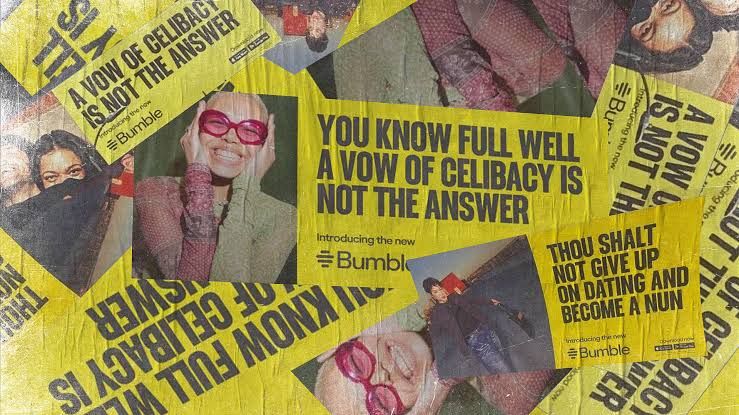
Image from tjwithers.com
The campaign’s portrayal of celibacy and use of religious references quickly drew criticism for being tone-deaf and misogynistic, as it appeared to condemn women for not engaging in casual relationships with men. Moreover, many felt the ads were dismissive of the growing trend of voluntary celibacy, a decision increasingly popular among women frustrated with hookup culture and negative dating experiences.
On social media, influencers like Lauren Salaun and actress Julia Fox voiced their disapproval of Bumble’s rebrand. Salaun criticized the campaign for “targeting women and not addressing men at all”, noting on TikTok, “Bumble is supposed to be a women-friendly dating app, and these ads are literally telling women how to date and what to do with their bodies.”
Meanwhile, Fox shared her positive experience with celibacy on TikTok as a response to Bumble’s offensive marketing campaign, stating, “2.5 years celibate and never been better tbh.” All this highlights how the campaign completely disregarded the valid reasons many women opt for abstinence.
Bumble’s apology
Realizing the gravity of its misstep, Bumble quickly issued an apology through an Instagram post. Also, the company unlisted the controversial ad from YouTube and took down the offending billboards. In its apology, Bumble admitted to its mistake and recognized that its campaign had unintentionally alienated a significant portion of its user base—particularly those who choose celibacy for reasons related to personal safety, reproductive rights or trauma.
To show their commitment to accountability, Bumble announced donations to the National Domestic Violence Hotline and other organizations. The company also offered its reserved billboard spaces to them for promoting causes that resonate more authentically with the community.
Despite Bumble’s actions, many users remain dissatisfied, with some declaring they would delete their Bumble accounts. Given the depth of the discontent, it looks like Bumble will have a challenging time regaining trust.
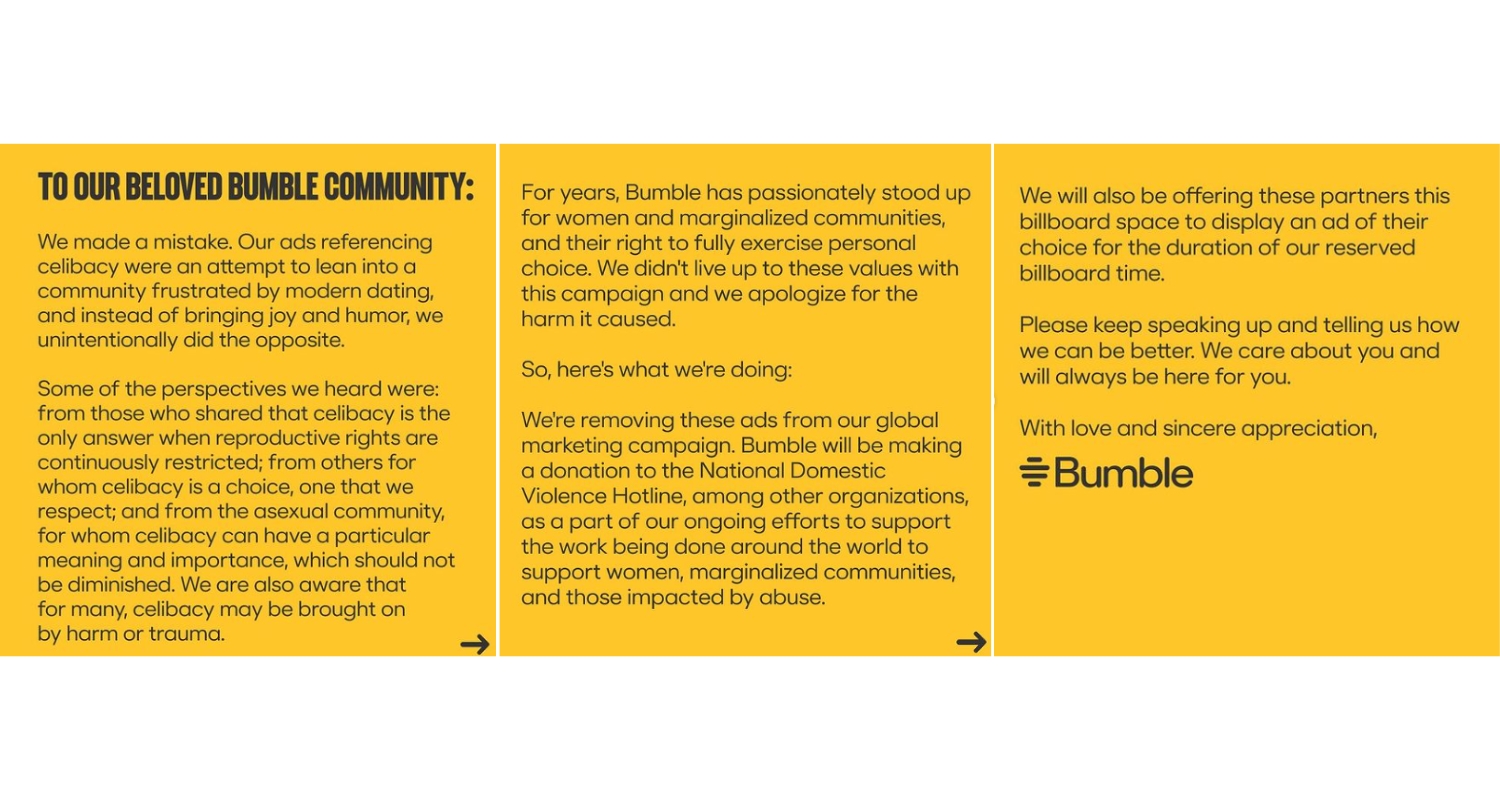
Screenshot of Instagram post by Bumble
What startups can learn from Bumble’s mishap?
The Bumble fiasco serves as a cautionary tale for other dating startups. Here are three important lessons to take away:
1. Understand your audience’s sentiment: In today’s world, where personal boundaries, autonomy and empowerment are critical to many, it’s vital for brands to understand the nuanced conversations taking place within their communities. Bumble overlooked the growing preference for celibacy among some users, which made its rebrand seem tone-deaf. This shows how important it is for startups to ensure their messaging aligns with their users’ values and experiences.
2. Stay true to your core mission: While evolving and rebranding are important for staying relevant, it’s crucial to remain grounded in the mission that made a company successful in the first place. Bumble was originally known for empowering women in the dating world by allowing them to make the first move. The decision to pivot away from this foundational principle, combined with the problematic campaign, contributed to the backlash and loss of trust.
3. Acknowledge mistakes swiftly and take corrective action: Bumble’s quick response to the criticism—pulling the problematic ads and issuing a public apology—helped mitigate some of the damage. For startups, owning up to mistakes and demonstrating a commitment to positive change are essential in crisis management and rebuilding trust with users.
Conclusion
Bumble’s 2024 rebranding efforts were ambitious but fell short. The backlash from the company’s anti-celibacy campaign underlines the risks of misunderstanding or ignoring your target audience, emphasizing the need for businesses to remain authentic, empathetic and aligned with community values.
Adding to its challenges, Bumble is now facing a class action lawsuit alleging securities fraud, filed in November. These developments should remind all startups of the importance of really knowing their market and being responsive to its shifts and sentiments.
Also read:
- How Brands Can Avoid Cancel Culture Chaos
- What Led to Balenciaga’s Recent Scandal?
- 5 Shocking Tech Startup Scandals of 2020
- Blake Lively, Justin Baldoni and More: Is Controversy the New Marketing Strategy?
Header Image by Bumble