
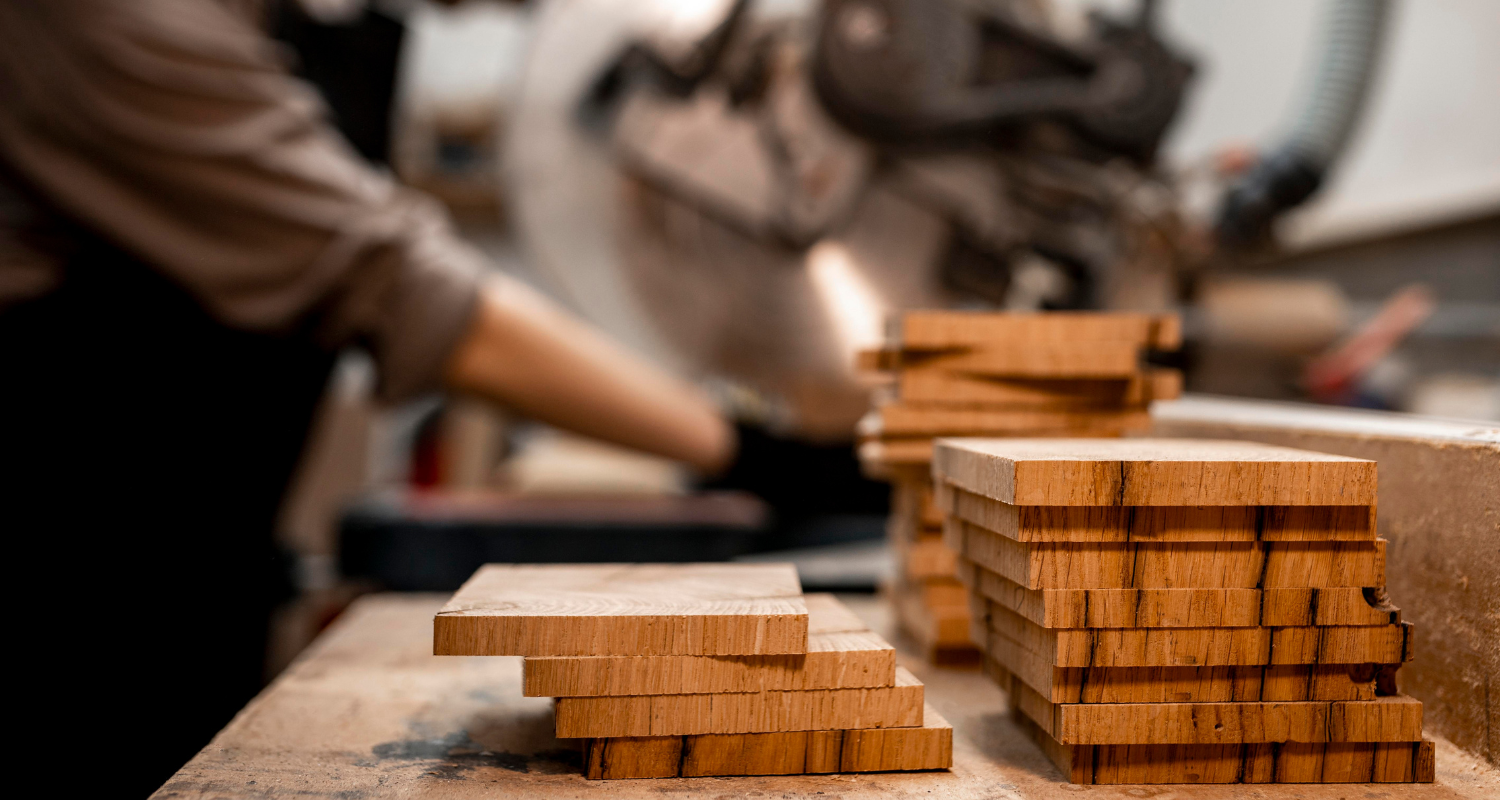

This magical timber might just outmuscle steel—or is it all just a wooden myth?
Steel underpins everything from high‑rises to hatchbacks, but a new class of densified wood nicknamed “Superwood” is vying for the crown. Picture façade panels that shrug off hurricane‑force winds or lightweight decking that matches the pulling strength of mild steel yet weighs only a sixth as much. That’s the promise behind InventWood, a University of Maryland spin‑off racing to scale production by summer 2025.
In this article, let’s explore how this super-charged timber is manufactured, why it has architects buzzing and whether it is truly ready to challenge steel’s heavyweight title.
What exactly is Superwood—and can it really replace steel?

Superwood plank
Image by InventWood via GlobeNewswire
The story of Superwood begins with a 2018 Nature paper by materials scientist Prof. Liangbing Hu from the University of Maryland. In that study—“Processing Bulk Natural Wood into a High-Performance Structural Material”—Hu’s team showed that by stripping out part of wood’s lignin and then hot-compressing the softened fibres, ordinary timber could be re-engineered into a material strong enough to rival mild steel. Building on those findings, Hu co-founded InventWood to bring the technology out of the lab and into construction sites.
Since then, InventWood has raised about US$50 million and broken ground on a 90,000‑square‑foot plant in Frederick, Maryland. The company’s Series A round, closed on 30 April 2025, will also scale up a pilot line in British Columbia and cement key commercial partnerships.
According to CEO Alex Lau, the Frederick plant will turn out one million square feet of Superwood per year beginning this summer. The first wave targets premium commercial and residential interiors—think high-end wall panelling, flooring and cabinetry. A second phase, slated for autumn 2025, expands into exterior-grade panels for cladding and roofing. Lau says full structural members—beams and columns—are on the roadmap “within a few years”, pending the final round of fire, seismic and long-term creep certifications.

InventWood’s manufacturing facility
Image from Connext CRE
How Superwood is made
Turning poplar or basswood into Superwood starts with a bath of sodium hydroxide and sodium sulfite—both common, food‑grade chemicals. The treatment removes some of the lignin (i.e. the natural polymer that makes wood rigid) and hemicellulose in the wood, softening the timber without destroying its grain.
Next comes hot compression at about 150 °F (65 °C). The heat collapses the cell walls of wood, forces cellulose fibres into near‑perfect alignment and squeezes out almost every air pocket. In that tight configuration, the fibres form millions of hydrogen bonds, locking together into a material up to four times denser and ten times stronger than the parent wood.
The resulting material is a dark, richly grained board that still looks like wood but behaves more like a high‑performance composite. And here is a fun fact: cellulose nanocrystals (CNCs) inside those fibres can reach tensile strengths of around 7.5 GPa—higher than many commercial carbon fibres (around 3.5 GPa)—which explains Superwood’s exceptional performance.
Performance: Strength, weight and safety
Superwood’s most eye-catching advantage is its strength-to-weight performance. InventWood says that this material delivers roughly 50% more tensile strength than mild structural steel and a strength-to-weight ratio that is ten times higher than steel. Yet, it tips the scales at only one-sixth the weight of steel. This unique combination of strength and weight makes it ideal for projects that need durability without the bulk, offering a smarter, more sustainable way to build.
That muscle comes with staying power: the board’s extreme density makes it highly resistant to rot, termites, warping and moisture. In fact, InventWood records less than 8% swelling after prolonged humidity exposure—a level of dimensional stability unheard-of in untreated timber. Fire behavior is equally impressive: façade-thickness panels earn an ASTM E84 Class A rating because the compressed wood is so dense it starves flames of oxygen, causing the surface to char slowly and self-extinguish.
Environmental impact: Toward carbon‑negative construction
Concrete and steel are carbon heavyweights. Every year, the steel industry pumps out about 3.6 billion tonnes of CO₂, while cement production adds another 2.9 billion tonnes. No wonder architects and engineers are scrambling for low-carbon and sustainable building materials.
Superwood changes the equation. Cradle-to-gate life-cycle studies indicate about 90% lower emissions per strength unit than steel, thanks to low‑temperature processing that uses far less energy. As the material is still 100% wood, it locks away the carbon the tree absorbed while growing and continues to store that biogenic carbon for decades. At the end of its service life, it can biodegrade safely—so long as it’s not incinerated—returning nutrients to the soil instead of lingering as landfill or scrap.

Image from Architecture2030
Combining these factors, Superwood offers a credible path to carbon-negative construction when it is sourced from responsibly managed forests and used as a substitute for emissions-intensive steel or concrete. Its environmental credentials, coupled with mechanical performance that meets or exceeds conventional materials, make Superwood one of the most promising tools in the effort to decarbonize the built environment.
Why architects and builders should care
Superwood gives designers the look and feel of real timber yet delivers mechanical properties that outperform everyday structural steel. Since each board weighs only a fraction of its metal counterpart, crews can use smaller foundations, lighter cranes and fewer truckloads—savings that show up in both the budget and the project timeline.
The material’s low-embodied-carbon profile also helps projects meet tough green-building standards such as LEED, WELL or the EU Taxonomy without the trade-offs that often come with alternative products. Moreover, although it is densified, it is still pure wood, retaining the biophilic warmth and natural grain clients love—just without the rot, termites or warping that keep facility managers awake at night.
The road ahead
In conclusion, Superwood is shaping up to be more than just hype—it’s a real contender in revolutionizing construction. If InventWood’s rollout stays on schedule, architects and builders could start specifying densified-wood cladding and decking as early as next year, with load-bearing members following soon after. Whether the material ultimately replaces steel across the board or carves out a substantial niche, the next few years will be pivotal for sustainable construction. One thing is clear: a lighter, stronger, carbon-storing alternative is entering the toolkit, and forward-thinking firms will want to keep it on their radar.
Also read:
- Are Electric Vehicles Truly Eco-Friendly?
- 4 Companies Reusing Coffee Husk for Eco-Friendly Innovations
- 3 Innovative Startups Transforming Food Waste into Eco-Friendly Products
- Meet the 4 Startups Transforming Potatoes into Eco-Friendly Products
- 5 Eco-Friendly Construction Technologies That Are Shaping Our Future Cities
Header Image from Freepik