
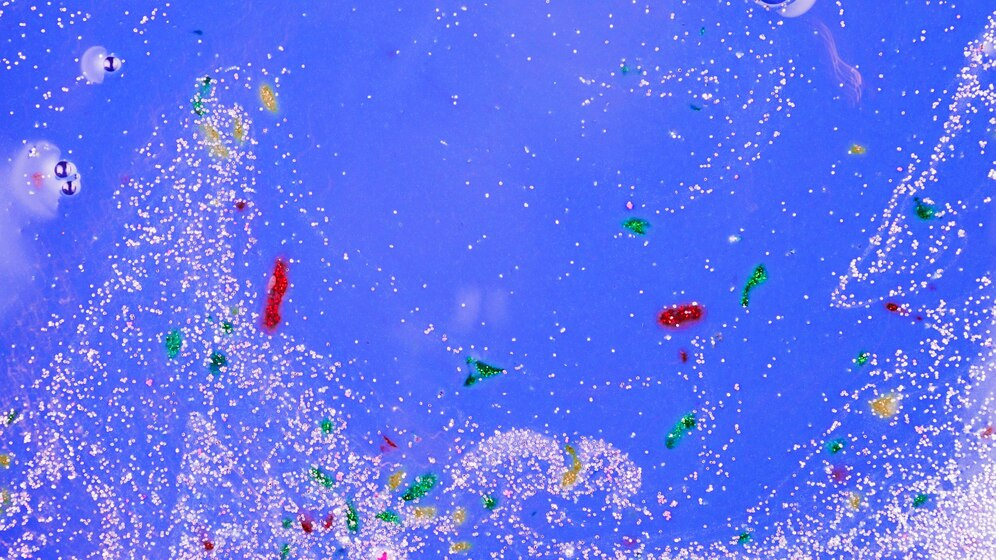

Each week, the average person ingests roughly five grams of microplastics—approximately the weight of a credit card. Despite ongoing debates regarding their health impacts, the potential risks of microplastics are increasingly evident.
The unseen enemy
When we think of “plastic pollution”, you may picture plastic bags floating in the ocean, tangling up and killing wildlife, or plastic bottles littered on the shore. However, we now face a subtler, yet pervasive threat: microplastic pollution.
These tiny particles, barely visible to the naked eye, range in size from five millimeters—the size of a small ant—down to one single nanometer. To put things in perspective, the diameter of a strand of human DNA is about 2.5 nanometers. Microplastics, often smaller than DNA, have infiltrated diverse ecosystems, from the food we consume to the air we breathe.
Research into microplastics has accelerated, particularly concerning their presence in marine environments. Estimates suggest that there are 14 million tons of microplastics on the seafloor and 358 trillion particles on the sea surface.
Drifting with the currents and winds, these plastics sometimes aggregate to form vast garbage patches and, as they degrade, break down into even smaller nanoplastics that sink deeper into the ocean. This makes removal efforts particularly challenging.
Bioaccumulation of microplastics
Microplastics pose a significant threat to marine life, entering the food chain as fish and other marine organisms ingest them. This bioaccumulation process continues up the food chain as larger predators consume contaminated prey. Eventually, these microplastics can find their way onto our plates through the various foods we consume.
Beyond food, microplastics also enter our bodies through other means such as bottled water and even the air we breathe. These particles can come from the shedding of synthetic textiles through washing and wearing, microbeads used in cosmetics and personal care products and fragmentation of larger plastic wastes.
A potential threat to human health
Despite the World Health Organization’s current position that there’s insufficient evidence to definitively link microplastics in the human body to specific health risks, an increasing number of studies are raising red flags.
While our bodies can expel larger microplastic particles, the smaller ones pose an insidious threat. They can infiltrate the lungs or penetrate the walls of the digestive tract, potentially accumulating in vital organs such as the liver, kidney and spleen. Alarmingly, studies have found microplastics in human placental tissue and even samples of breast milk.
Potential effects of microplastics on our health include impaired lung function, triggering inflammatory responses, disrupting immune functions, enabling pathogen infiltration and even breaching the blood-brain barrier—which could contribute to neurodegenerative conditions like Parkinson’s disease.
United in action
This uncertainty around the full impact of microplastics calls for a coordinated global response between governments, industries, environmental agencies, public awareness campaigns and scientific communities worldwide.
The United Nations Environment Programme (UNEP) leads with initiatives like the Clean Seas Campaign and participates in the UN Alliance for Sustainable Fashion, promoting a circular textile value chain.
Other major organizations have also highlighted the urgency of addressing microplastic sources from personal care products and synthetic clothing. In The Pew Charitable Trusts’ 2020 report “Breaking the Plastic Wave”, the organization warns that urgent systemic changes are needed to prevent a potential doubling of microplastic levels by 2040.
With microplastics pervasive across environments and borders, combining efforts from governments, industries and communities is crucial. This collective action, along with a societal shift towards reducing plastic use, is essential for mitigating the environmental and health impacts of microplastics.
Protecting yourself: Lifestyle changes to reduce microplastic exposure
While completely avoiding microplastics may be impossible, significant reductions in exposure are achievable through mindful choices. Opting for glass or metal over single-use plastic, choosing natural fibers, and using air and water purifiers at home can all help decrease microplastic intake. Moreover, since food is one of the major sources of microplastics, consider reducing the consumption of high-risk foods like seafood and favoring produce grown in clean areas.
This comprehensive approach is not just about environmental conservation—it’s a public health imperative. By adjusting our lifestyles and advocating for systemic changes, we can protect ourselves and future generations from the invisible threats posed by microplastics.
Also read:
- What Can We Do for Sustainable Fashion?
- 5 Eco-Friendly Construction Technologies That Are Shaping Our Future Cities
- Top 5 Greenwashing Scandals of the Past Decade
- Greenhushing: Why Some Companies Downplay Their Green Success
Image from Freepik


