


Protecting sacred forests matters for both nature and culture.
In an age where threats of deforestation, climate change and human encroachment loom large, preserving natural treasures—like sacred groves in India, home to a plethora of flora and fauna—requires more than just traditional methods. These sanctuaries, revered by local communities, are not just cultural relics but also biodiversity hotspots. This is where the role of innovative technology becomes paramount.
In this exploration, we delve into advanced technological solutions revolutionizing forest conservation. By examining the synergy between cutting-edge technology and traditional practices, this article highlights potential strategies for safeguarding sacred groves. These groves symbolize ecological and cultural significance, making their protection imperative for a sustainable future.
But first—what are sacred groves?
Sacred groves are pristine forest areas conserved by local or tribal communities, often dedicated to various deities. These untouched areas, deeply rooted in spiritual beliefs, are considered off-limits for human disruption. They stand as testaments to an ancient tradition intertwining spirituality with environmental conservation.
In the case of India, over 14,000 sacred groves are recorded, categorized into Tapovan, Mahavan and Sreevan: Tapovan are forests associated with penance, Mahavan with the protection of flora and fauna, and Sreevan are dedicated to the “Goddess of Prosperity”, offering sustainable resources like dry wood and food produce to local communities.
These forests are not only ecological treasures but also cultural bastions, found extensively along the Western Ghats, Central India and the Northeastern regions, particularly in areas with high concentrations of indigenous communities.
The “Fence of Fear” approach to conservation in India
The historical approach to conservation in India, often termed the “Fence of Fear”, is rooted in cultural taboos and religious practices, like snake worship in groves such as Sarpa Kavu. These practices have historically shielded these biodiverse areas. However, with diminishing faith and evolving social values, these sacred spaces face growing threats. Urbanization, resource exploitation and changing generational attitudes pose significant challenges to their conservation.
Recognizing this, there is an emerging focus on leveraging modern technology to reignite interest in preserving these sanctuaries among the youth. Here’s a look at the potential tech solutions to help protect these sacred groves.
Innovative technologies for forests conservation
Drone technology for surveillance

Image courtesy of Tropogo
Drones equipped with high-resolution cameras and sensors are revolutionizing forest conservation efforts. Going beyond their initial roles in surveillance and photography, drones are a cost-effective and precise alternative to traditional survey methods. They capture crucial data such as high-resolution aerial images, light, detection and ranging (LiDAR) data and multispectral information. This detailed data collection is invaluable for comprehensive forest assessments, including terrain analysis and hydrological studies (i.e. the assessment of water-related data in the forest ecosystem), which is essential for maintaining the health of these sacred groves.
AI and machine learning
Artificial intelligence (AI) and machine learning algorithms are adept at analyzing vast amounts of data from satellites, drones and ground sensors. They can predict potential threats like forest fires, track illegal logging or hunting activities and assess the overall health of forests.

Image courtesy of World Bank
For instance, TrailGuard AI uses Intel’s vision chips to detect both animals and humans on forest trails, sending instant alerts to park rangers about potential threats. Remarkably compact, this device offers enhanced detection capabilities and a long battery life, significantly reducing false alarms.

Image courtesy of Rainforest Connection
Another innovative example is the Rainforest Connection (RFCx)’s forest monitoring system. This AI-powered device utilizes old cellphones and custom solar panels to detect the sounds of human activities such as chainsaw noise, vehicles and gunshots. It also offers an app for real-time forest sound streaming, fostering greater interest in conservation. Uniquely, the app records photographic and audio evidence onto the blockchain, potentially aiding in legal proceedings.
Remote sensing and satellite imagery
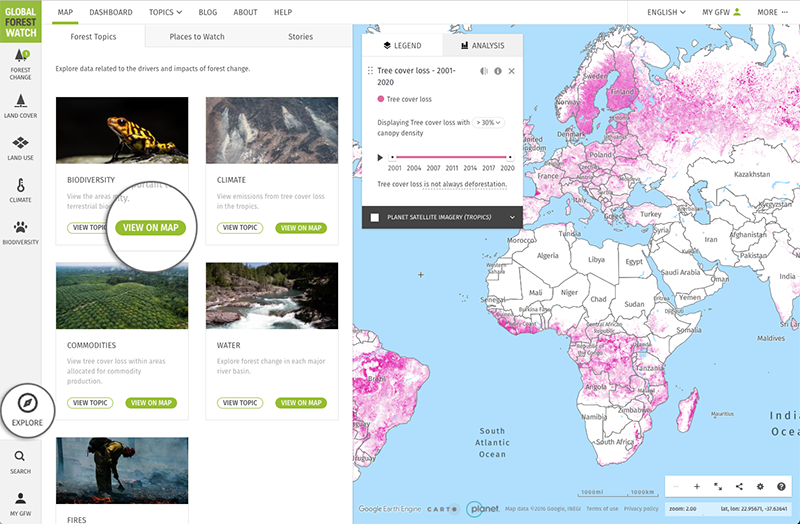
Image courtesy of Global Forest Watch
Using satellite technology, remote sensing provides a bird’s-eye view of large forest areas, enabling the monitoring of changes in forest cover, biodiversity and environmental conditions. Platforms like Global Forest Watch (GFW) utilize satellite imagery and data from NASA and other sources for near real-time monitoring of global forest changes. GFW’s insights into deforestation and forest degradation are instrumental in aiding decision-making for governments, NGOs and local communities focused on forest conservation.
Virtual reality and augmented reality
Virtual reality (VR) and augmented reality (AR) technologies are emerging as powerful tools in forest conservation. They offer immersive experiences that raise awareness and educate the public about the importance of conserving forests.
VR experiences can virtually transport users to distant forests, showcasing the effects of deforestation or climate change. This creates a deep emotional connection to these environments. Conversely, AR applications provide digital overlays of information in real-world settings. These apps can reveal tree species, age or wildlife details simply by pointing a smartphone at them. This capability is invaluable for forest rangers and researchers in fieldwork.
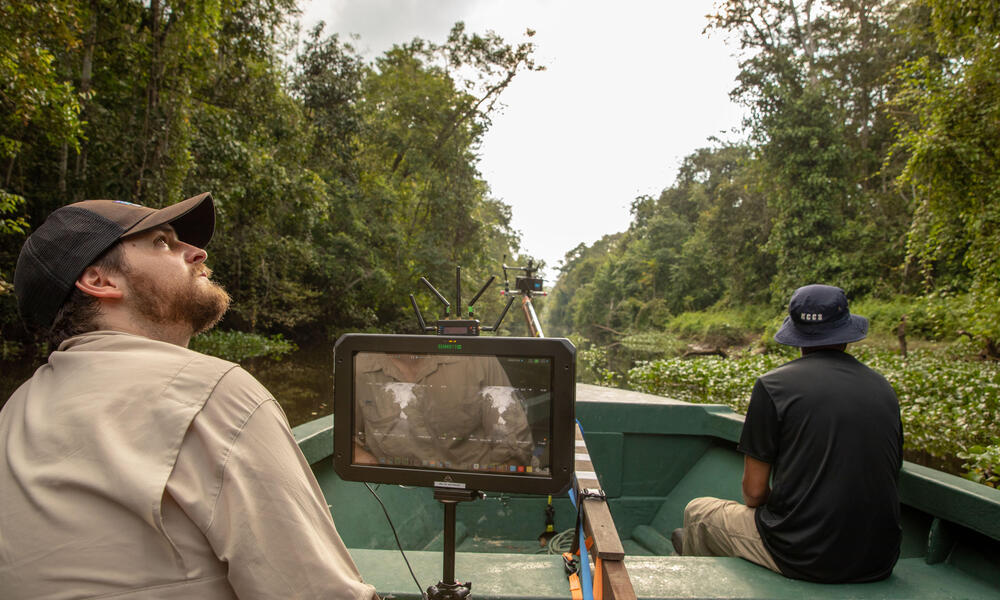
Image courtesy of WWF
An example of VR’s practical application is the ecosphere VR video series by PHORIA in collaboration with the World Wildlife Fund (WWF). This series takes viewers through diverse ecosystems, from the savannahs of Kenya to the rainforests of Borneo, engaging them with wildlife and conservation efforts in cinematic VR.
By leveraging the immersive and interactive capabilities of VR and AR, these technologies have the potential to play a significant role in promoting forest conservation efforts, enhancing public engagement and providing innovative solutions for research and management of forest ecosystems.
Harnessing technology for the future of sacred groves
The integration of technologies like drones, AI, VR and AR in forest conservation can mark a crucial step in combining technology with environmental stewardship. As we confront challenges like habitat loss and climate change, the role of technology in safeguarding sacred groves becomes increasingly crucial.
These groves teach us sustainable coexistence and remind us of the importance of living in harmony with nature. Embracing technology as an ally in forest conservation offers a beacon of hope, not only in protecting these ecological and cultural jewels but also in restoring endangered beliefs and collective memories for future generations.
Also read:
- Technology in Ecosystem: How AI Optimizes Wildlife Conservation?
- 5 Climate Tech Startups Tackling Climate Change
- How Businesses Can Do Their Bit in Fighting Climate Change
Header image courtesy of Unsplash


